

When I started Saudi Controls in the early days, automation was still a foreign concept in our region. We had limited resources but a clear vision: to modernize our nation's infrastructure through technology. That determination, not just technology, became the foundation of every success that followed. Today, as I watch businesses across Saudi Arabia grapple with the same challenge of moving from outdated systems to cloud-driven solutions, I see the same opportunity we once faced.
TL;DR: Key Insights
Cloud migration in Saudi Arabia isn't just about adopting new technology, it's about transforming how your business operates. This guide shares real experiences from modernizing legacy systems, practical steps for successful migration, and why human leadership matters more than the tools themselves. You'll learn the proven migration frameworks, avoid common pitfalls, and discover how to build lasting efficiency through strategic cloud adoption.
Why Legacy Systems Are Holding Your Business Back
Legacy systems feel comfortable. They're familiar. Your team knows them inside and out. But comfort comes at a cost that compounds every year. I've seen businesses in Saudi Arabia lose competitive ground not because they lacked ambition, but because their infrastructure couldn't keep pace with their vision.
The problem with legacy systems isn't just technical debt, it's opportunity cost. Every hour your IT team spends maintaining old servers is an hour they're not innovating. Every manual process that could be automated is slowing down your response time in a market that rewards speed. When we first recognized this at Saudi Controls, we knew that business automation wasn't optional; it was survival.
The infrastructure demands in our region have grown exponentially. What worked five years ago—on-premise servers, manual backup procedures, limited scalability—simply can't support the digital economy we're building today. Cloud migration in Saudi Arabia has become the bridge between where businesses are and where they need to be.
The Real Cost of Staying Behind
Before we migrated our systems, I calculated what "staying comfortable" was actually costing us. The numbers were sobering. We were spending 40% of our IT budget on maintenance alone. Our team couldn't deploy new features quickly because every change had to navigate through layers of legacy architecture. Customer expectations were evolving faster than we could adapt.
But the hidden costs cut deeper. Employee frustration grew as they watched competitors launch features in weeks that took us months. Talented engineers left because they wanted to work with modern tools. We were bleeding competitive advantage in ways that didn't show up immediately on balance sheets but eroded our market position steadily.
Cloud efficiency isn't just a buzzword, it's about removing the friction that prevents your business from operating at its true potential. When your infrastructure scales automatically with demand, when your teams can collaborate in real-time across locations, when security updates happen seamlessly without downtime, that's when transformation becomes tangible.

Cost comparison and efficiency gains.
My Honest Take: Technology Doesn't Transform Industries, People Do
Here's where I challenge the prevailing narrative around digital transformation. Walk into any tech conference, and you'll hear presentations about artificial intelligence, machine learning, and cloud infrastructure as if these tools alone create change. They don't.
Technology doesn't transform industries, people do. Tools evolve, but it's leadership, collaboration, and curiosity that drive real change. Too many focus on innovation as an outcome; I see it as a mindset built every day within teams.
I've watched countless cloud migration projects in Saudi Arabia fail not because of technical issues, but because organizations treated migration as an IT project rather than a business transformation. They bought the best cloud migration tools, hired consultants, and expected magic. But without preparing their people, without shifting mindsets, without building a culture that embraces change, the technology sat underutilized.
When we began our legacy modernization journey, I spent more time talking to our team members than I did evaluating platforms. I needed to understand their fears, their workflows, their pain points. The most sophisticated cloud architecture means nothing if your employees don't understand why they're changing or how it benefits them.
This people-first approach to cloud migration became our differentiator. While competitors focused on technical specifications, we focused on change management. We trained teams not just on new tools, but on new ways of thinking. We celebrated small wins. We made migration everyone's project, not just IT's burden.
Understanding the Cloud Migration Landscape in Saudi Arabia
The cloud adoption journey in Saudi Arabia has unique characteristics shaped by our regulatory environment, infrastructure development, and Vision 2030 initiatives. Understanding these regional nuances makes the difference between successful migration and expensive false starts.
Saudi Arabia has invested heavily in local cloud infrastructure. Major providers have established data centers within the kingdom, addressing data sovereignty concerns that once deterred adoption. This infrastructure growth has accelerated cloud infrastructure within the kingdom across industries, from healthcare to manufacturing to government entities.
However, successful cloud migration in Saudi Arabia requires more than choosing a provider. You need to navigate compliance requirements, understand data residency regulations, and plan for integration with systems that may not be fully digital yet. The public sector, in particular, has specific requirements that must be addressed early in your planning phase.
The maturity of cloud migration tools has also made this transition more accessible. What required massive consulting teams five years ago can now be managed with smaller, skilled teams using automation and orchestration platforms. But, and this is crucial, tools only work when directed by clear strategy.
The Seven Types of Cloud Migration Strategies
Not all cloud migrations are created equal. Understanding different migration approaches helps you choose the strategy that matches your business needs and technical capabilities. Industry experts have identified seven distinct migration types, often called the "7 Rs":
- Rehost (Lift and Shift): Moving applications to the cloud without modification. This approach offers the fastest migration but doesn't immediately leverage cloud-native benefits.
- Replatform (Lift, Tinker, and Shift): Making minimal optimizations during migration without changing core architecture.
- Repurchase (Drop and Shop): Moving to a different product, typically shifting from traditional licenses to SaaS models.
- Refactor (Re-architect): Redesigning applications to be cloud-native, taking full advantage of cloud capabilities like serverless computing, microservices, and auto-scaling.
- Retire: Identifying applications that are no longer needed.
- Retain: Keeping certain applications on-premises due to compliance, latency, or other business requirements.
- Relocate: Moving infrastructure to the cloud with minimal changes, often at the hypervisor level.
The key is matching strategy to each application's characteristics. Mission-critical systems might warrant refactoring, while less critical applications could be rehosted quickly.
The Five Phases of Successful Cloud Migration
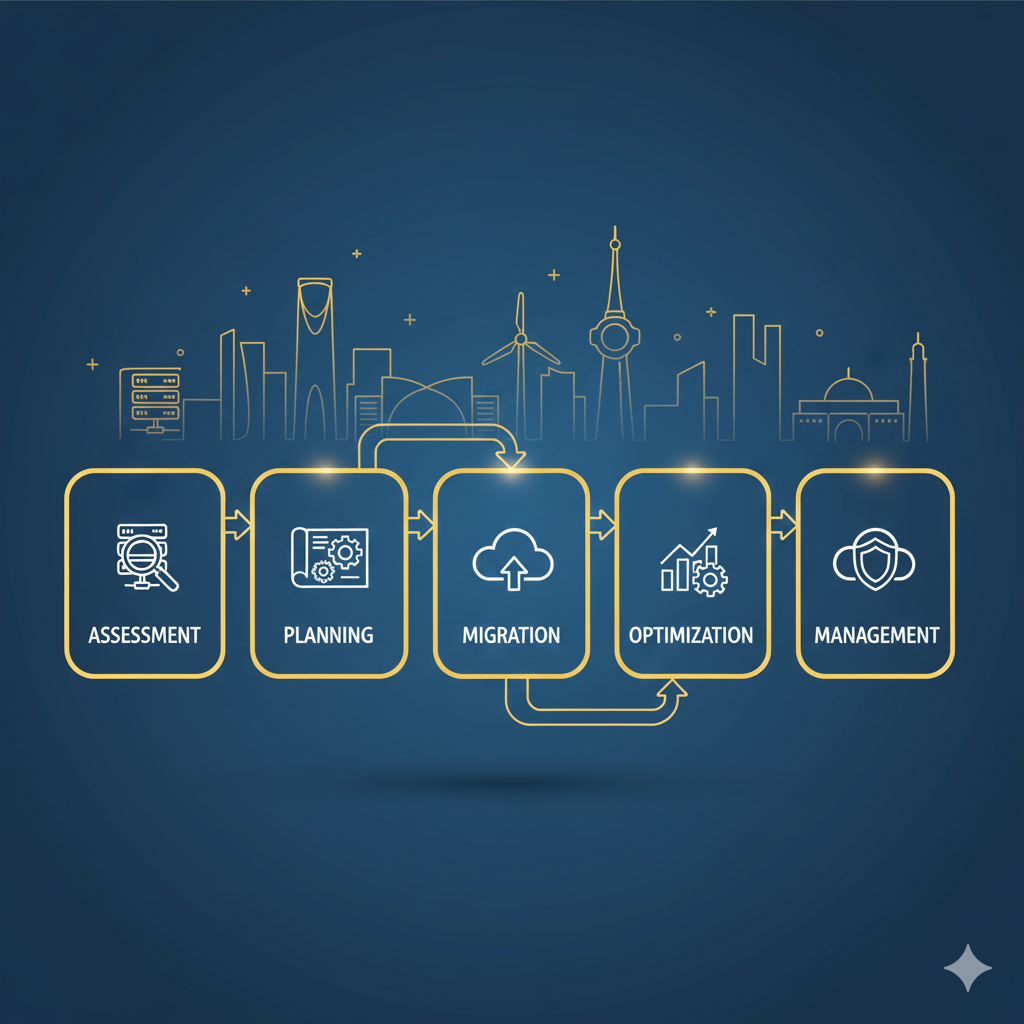
Every successful cloud migration I've witnessed or led follows a similar pattern. These five phases create the roadmap from planning to optimization:
Phase 1: Assessment and Discovery
Before touching any infrastructure, you must understand what you have. Document every application, database, and integration. Assess dependencies between systems.
Phase 2: Strategic Planning
Define your cloud migration goals clearly. Are you reducing costs? Improving performance? Enabling new capabilities? Your goals determine your approach.
Phase 3: Design and Architecture
Design your target cloud environment. This includes network architecture, security controls, identity management, and disaster recovery plans.
Phase 4: Migration Execution
Execute migrations according to your prioritized roadmap. Start with pilot migrations to validate processes. Each migration should include testing phases, rollback plans, and success criteria.
Phase 5: Optimization and Management
After migration, the work continues. Optimize resource allocation, implement cost management practices, and leverage cloud-native features progressively.
Implementing the 5 R's Framework for Your Applications
The "5 R's" framework provides a practical decision-making tool for application migration. Here's how to apply it:
- Rehost: Use this for applications where speed matters more than optimization.
- Refactor: Reserve this for applications that are core to your competitive advantage.
- Revise: Update applications with deprecated frameworks or unsupported databases.
- Rebuild: Sometimes, rebuilding from scratch makes more sense than migrating technical debt.
- Replace: Using SaaS alternatives often delivers better results at lower cost for common business functions.
The framework works best when applied systematically across your application portfolio, with decisions documented and reviewed by business stakeholders, not just IT.
Common Causes of Migration Challenges (And How to Avoid Them)
While the question "what are the four main causes of migration" often refers to human migration in general contexts, in cloud migration, four primary challenges consistently emerge:
- Inadequate Planning: Rushing into migration without thorough assessment creates cascading problems.
- Skills Gaps: Your team's expertise with on-premises infrastructure doesn't automatically translate to cloud proficiency.
- Security Concerns: Misconceptions about cloud security cause hesitation. Work with professionals who understand cloud-native security models.
- Cultural Resistance: People fear change. Address this through transparent communication.
Practical Steps: How to Execute Cloud Migration Successfully
Based on my experience leading technology transformations, here's a practical approach to cloud migration that balances ambition with pragmatism:
Step 1: Build Your Business Case
Quantify current costs comprehensively. Project cloud costs realistically.
Step 2: Choose Your Cloud Strategy
Decide between public, private, or hybrid cloud based on your requirements.
Step 3: Select Your Cloud Migration Tools and Partners
Evaluate cloud migration services from providers who understand local requirements.
Step 4: Start Small, Learn Fast
Pilot with non-critical applications. Build confidence without risking core business functions.
Step 5: Scale Systematically
Apply lessons from pilots to larger migrations. Maintain momentum.
Step 6: Optimize Continuously
Cloud migration isn't a destination, it's the beginning of continuous improvement.
Building Sustainable Leadership Through Technology
I believe true progress lies at the intersection of technology, human potential, and sustainable leadership. My mission has always been to bridge innovation with integrity, building systems and organizations that last.
This principle has guided every technology decision I've made. Cloud migration in Saudi Arabia isn't just about moving data and applications, it's about building organizational capabilities that endure beyond any single technology cycle.
Sustainable leadership in technology transformation means investing in people, thinking long-term, maintaining integrity, and balancing innovation with stability. This approach transformed Saudi Controls from a regional automation company into a technology leader.
Conclusion: Your Next Chapter Starts with a Single Step. From legacy systems to cloud-driven efficiency isn't just a technical journey, it's a transformation of how your organization operates. The new era for businesses isn't coming, it's already here. Your legacy systems don't have to define your future. Take that first step today.
Frequently Asked Questions
Ready to Modernize Your Infrastructure?
Join the conversation about cloud migration and legacy modernization. Let's build sustainable, future-ready businesses in Saudi Arabia together.